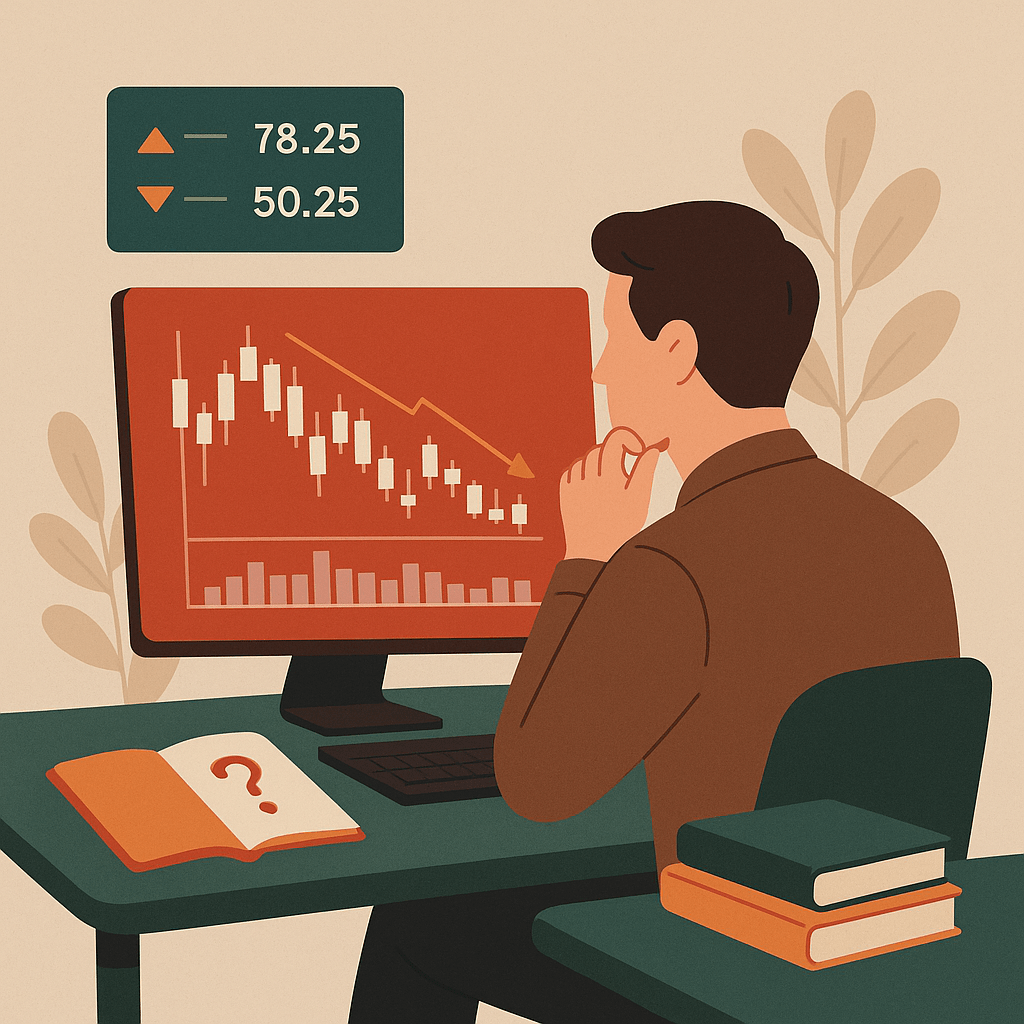
What Stock Investors Should Never Do
Was that time truly an investment?
One of the most common pieces of advice in stock investing is to “think long-term.”
Yet, reality often tells a different story. Many individual investors, after clicking the buy button—or while agonizing over the right time to sell—end up staring at the market depth window, watching prices tick up and down as time slips away.
And if only they used that time to make a productive decision, it wouldn’t be so bad.
The real issue is that most of them are merely watching—passively and helplessly. No decisions, no actions. Just time lost.
And another day passes. Then another. Just like that, under the guise of investing, precious time evaporates.
There’s nothing more foolish than sitting in front of the market depth window.
1. Wasting entire days wondering, “Should I sell now?”
Many retail investors say things like,
“I was in the market all day—I watched the screen nonstop.”
But truly being in the market only counts when you’re making decisions, taking action, and executing.
Watching prices rise and fall while hesitating—“Is this the peak?”, “Could it go higher?”—is not investing.
That’s simply time spent in anxiety and ignorance.
Especially if your emotions fluctuate every time the price moves a few cents, it’s a sign you lack a clear standard for buying and selling.
Without standards, you can’t decide.
Without decisions, you only waste time.
And lost time never comes back.
2. Why investors who rely on charts end up swayed by the market
This is not a blanket critique of technical analysis.
But personally, I don’t trust those who blindly follow charts—the so-called “chartists.”
They often interpret market movements after the fact.
They’ll say a long candle is a buy signal or heavy volume indicates institutional interest—but these are all retrospective interpretations.
Such analysis can always be read differently and rarely leads to reproducible results.
Worse, technical analysis pulls investors into watching the market directly.
They constantly open the order book, and their emotions ride the 5-minute and 1-minute candles.
This is the epitome of surrendering your life’s rhythm to the market—an extremely risky way to live.
3. True investors have a clear set of standards
Proper investing is actually quite simple.
Why did I buy this stock? When will I sell it? At what price will I sell it?
Set clear standards for these three questions and act only when those standards are met.
Outside those moments, you’re better off doing something else—or studying for your next investment.
Without standards, the market depth window offers no real information—only emotional chaos.
And people driven by emotion can never invest consistently.
The stock market doesn’t favor such investors.
If you don’t have standards, it’s better not to invest at all
Do you spend the entire day staring at the order book?
Do small price changes make you nervous or excited?
If so, your first step isn’t investing—it’s building your standards.
Until then, it’s better not to buy or sell.
Investing isn’t just a battle against time.
It’s a battle of standards and decisions.
And once again,
Lost time never returns.
 The Valuation : Value Investing Through Valuation
Leave a comment