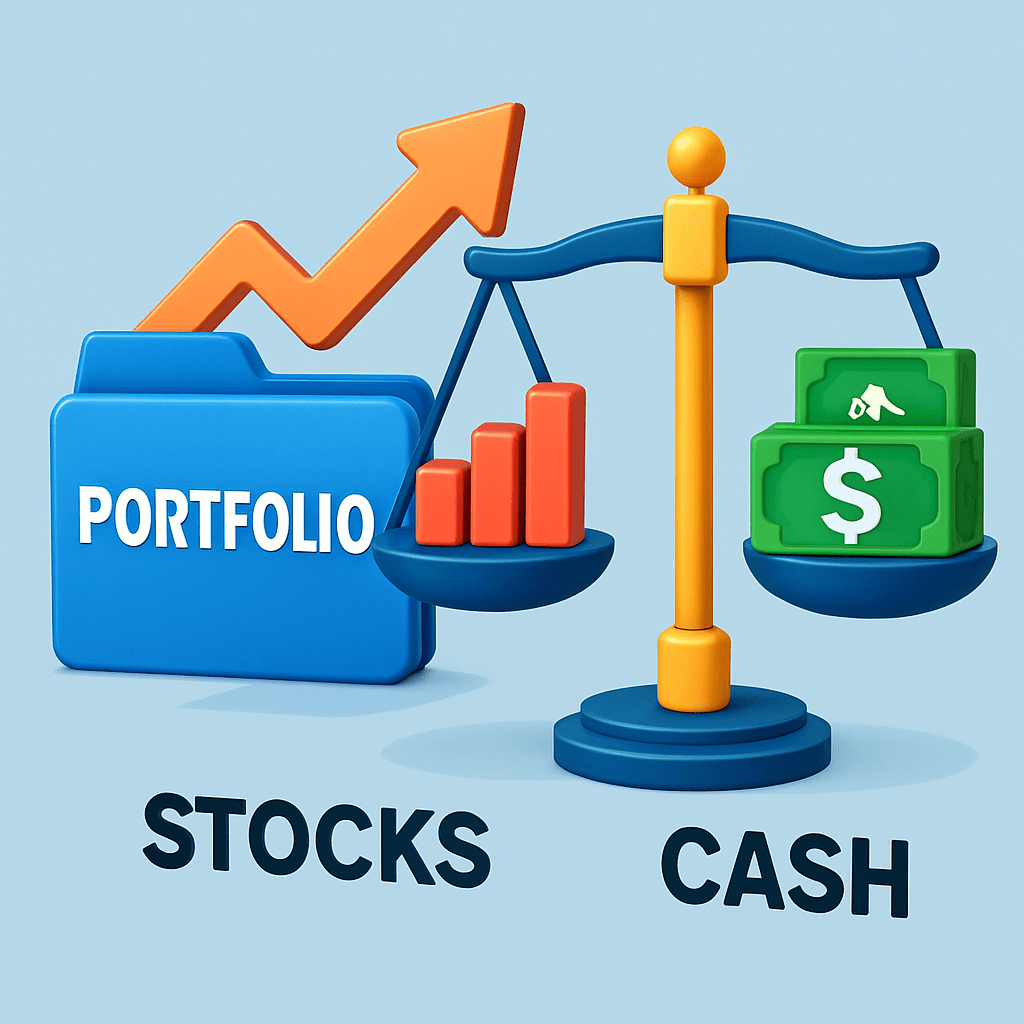
From 100% Stocks to 100% Cash—In a Single Day
Last week, my portfolio flipped entirely.
Until Thursday, I was 100% in equities.
By Friday’s market close, I was 100% in cash.
It was a rapid and complete repositioning of my assets.
This wasn’t an emotional reaction.
I interpreted the market signals based on my personal investment principles—
And responded decisively with a shift to cash.
No regrets.
But with time to reflect, I can’t confidently say it was the best choice.
Had I kept a cash buffer, I could have chosen to simply observe—rather than exit entirely.
Aggressive investing yields strong returns—but poor flexibility
One of the core tenets of investing is position sizing.
I’ve always taken an aggressive stance—
Keeping nearly all my capital in stocks and riding out corrections with high risk tolerance.
This approach paid off in bull markets.
In fact, last year and early this year delivered solid returns.
But the problem became clear when the unexpected hit.
1. In a sharp downturn, there’s no room to maneuver
Friday’s market broke down swiftly.
Most of my portfolio turned red.
With no cash available, I couldn’t:
- Buy in tranches
- Rebalance
- React quickly to minimize losses
The only card I could play was sell—a defensive retreat.
2. Dry powder gives you strategic flexibility
This experience reminded me:
Cash doesn’t generate returns, but it keeps your strategy alive.
Cash isn’t just idle capital.
It’s:
- A cushion when the market shakes
- A tool for seizing opportunity in sharp downturns
- A psychological buffer that prevents emotional decisions
Had I maintained a cash position, I might have avoided such a drastic sell-off.
I would have had more options—and more control.
Extremes always carry hidden risks
There’s nothing inherently wrong with being 100% in stocks or 100% in cash.
But violently swinging between the two can be more dangerous than the market itself.
The essence of investing lies in:
- Pursuing returns
- Managing risk
- Staying prepared for opportunity
This experience re-centered me on one key principle:
Balance.
Extremes strip you of flexibility.
And investing without flexibility often leads to disappointing outcomes.
 The Valuation : Value Investing Through Valuation
Leave a comment