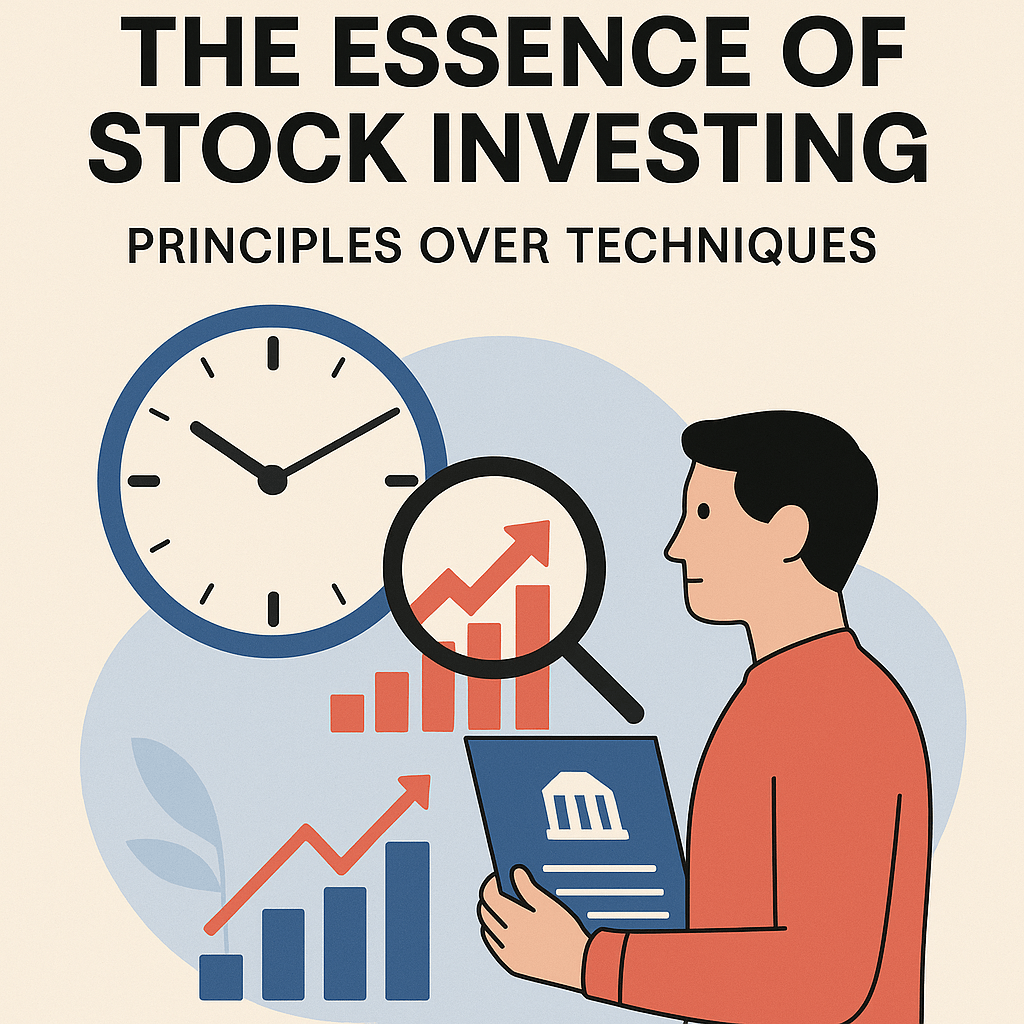
The Market Where Time Reveals the Truth
In the stock market, prices are often driven by emotions in the short term, but over the long run, they inevitably reflect the true value of a business.
Strong companies, regardless of temporary downturns, tend to find their fair value as time passes.
The investor’s role is to look beyond market noise and focus on the fundamental value of a company.
Valuation: The Compass of Stock Prices
Valuation is not just about crunching numbers.
It is the process of quantifying how much a company is worth today and how much profit it can generate in the future.
Metrics like PER, PBR, and EV/EBITDA are useful, but ultimately, the key question is: “At this price, is it reasonable to buy this company?”
Principles Matter More Than Techniques
Many people dream of mastering sophisticated techniques in stock trading.
The reality, however, is different.
Earning money in the stock market does not require advanced trading skills.
What matters far more are clear principles for assessing value—and the patience to trust those principles.
The True Skill: Recognizing a Good Company
Valuation is not an overly complex discipline.
By simply examining profitability, growth potential, and financial soundness, investors can reach sound conclusions.
The essential skill lies in being able to explain, in simple and clear terms, why a company is good.
The clearer that explanation, the stronger one’s conviction in the investment.
Conclusion: The Core Principle of “Buy Low, Sell High”
At its essence, stock investing is about buying at a low price and selling at a higher one.
But to put this principle into practice, one must first define what “low” really means.
That definition begins with valuation.
Investing rooted in principles—not in flashy techniques—is what ensures survival in the stock market.
 The Valuation : Value Investing Through Valuation
Leave a comment